


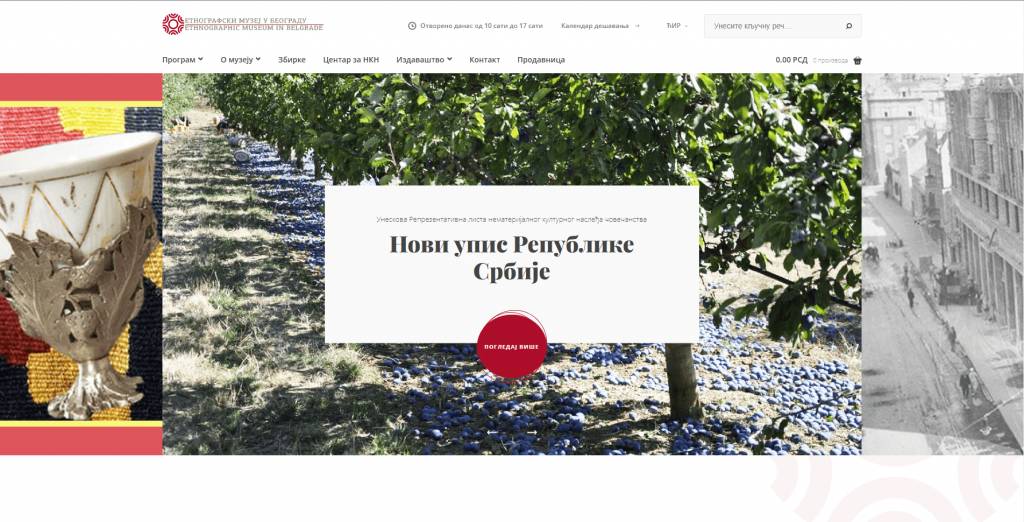
The Ethnographic Museum
The Ethnographic Museum in Belgrade was founded in 1901, as a separation of the Ethnographic Department from the National Museum. The idea and theoretical basis for the creation of the museum, in which the folk life will be studied, was provided by historian Stojan Novaković, a regular member of the Serbian Scientific Society (today the Serbian Academy of Sciences and Arts).
Challenges
The core challenge in developing the museum’s online presence was creating a modern interface that would honor the institution’s cultural depth while also supporting day-to-day functionality. This included building a digital infrastructure that could support a variety of content types: exhibition overviews, publications, event announcements, and a digital shop for museum-related products. With a large volume of multilingual content and historically sensitive material, the structure had to be both intuitive and editorially sustainable.
Ensuring accessibility for all user groups—including students, researchers, tourists, and professionals—was another major focus. The goal was to achieve a clear information hierarchy while preserving visual appeal and authenticity.
Technologies
The foundation of the site is based on WordPress, chosen for its content flexibility and long-term scalability. The visual structure and layout were built using Elementor, which made it possible to implement a visually refined user experience while maintaining full editorial control for the museum’s staff. Elementor’s responsive grid and visual interface allowed for tailored presentation of archival images, timelines, and textual narratives.
The site includes WooCommerce integration to support the museum shop, enabling visitors to purchase publications, souvenirs, and event tickets directly from the website. The multilingual aspect of the site is powered by Polylang, making the content accessible in both Serbian and English, with potential expansion for additional languages.
To support user communication and institutional contact, Contact Form 7 was implemented and customized to meet internal workflows. SEO optimization was managed via RankMath, which ensured the site met visibility standards and structured metadata for content discoverability.
A combination of lightbox galleries, Swiper sliders, and subtle scroll animations (via AOS) was used to create an engaging and smooth visual experience, especially when showcasing permanent exhibitions or temporary curatorial content.
The results
The result is a highly functional, visually coherent, and culturally sensitive website that mirrors the institution’s historical significance and modern relevance. The site now serves as a bridge between traditional ethnographic scholarship and contemporary digital access, offering both informational depth and a user-friendly interface.
Visitors can explore curated collections, read about research initiatives, view upcoming exhibitions, and browse products—all within a structured and fully responsive environment. Through the seamless integration of WordPress, Elementor, and key plugins like WooCommerce, Polylang, and Contact Form 7, the Ethnographic Museum’s online identity has been elevated to meet both its institutional goals and the expectations of a modern audience.
For more information visit site: https://etnografskimuzej.rs/
Date: Apr 06, 2020

